On this page6 sections
One Is a Key, the Other Is the Content
Comparisons of these two usually start by saying a QR code holds more data. True, and it frames them as rivals on one axis when the useful distinction is a different one entirely.
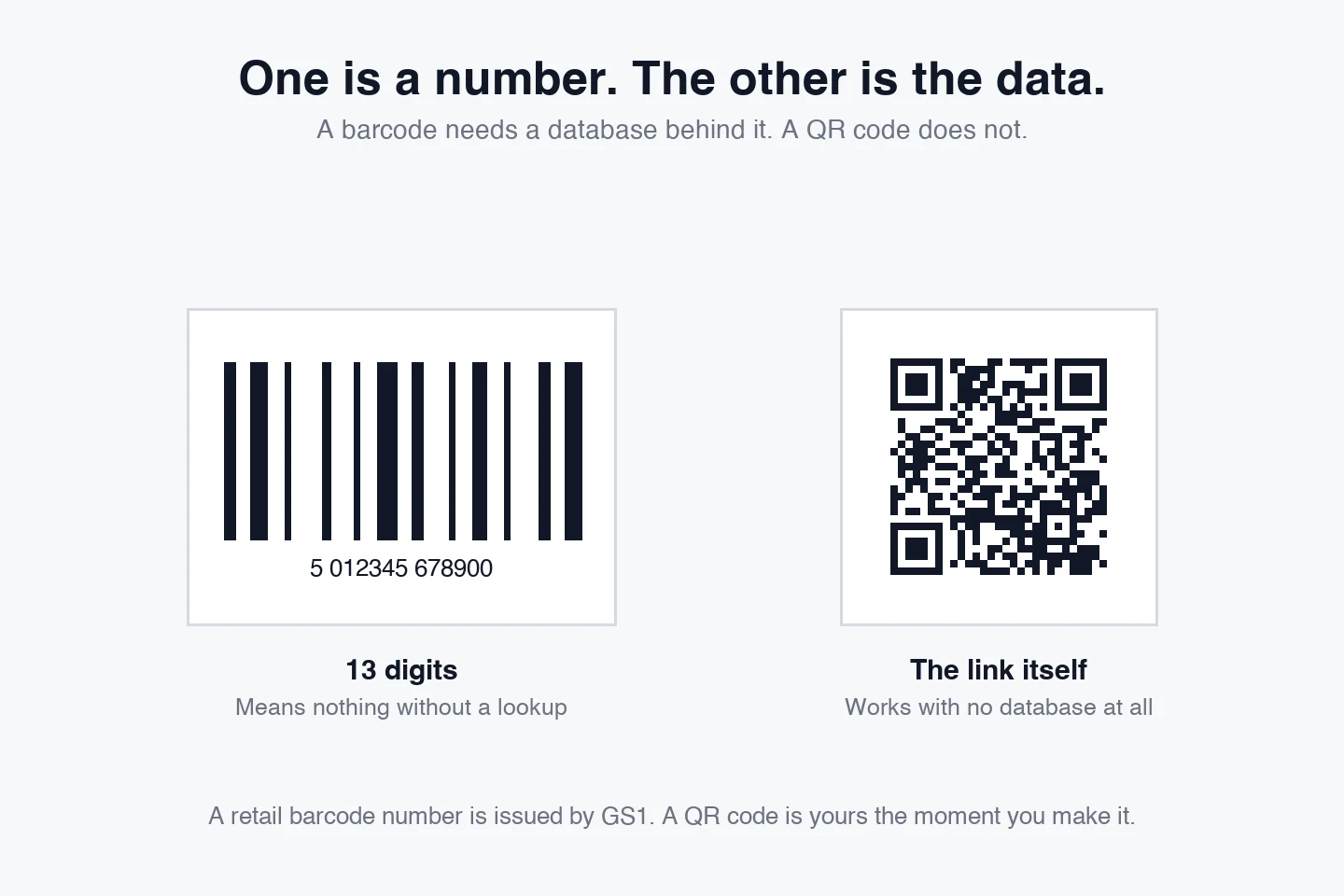
Scan the barcode on a tin of beans and you get thirteen digits. Those digits are not the price, the name or the ingredients. They are a key, and the supermarket's database turns them into everything else. Take the tin to a shop that has never stocked it and the same barcode means nothing at all, because the lookup fails.
Scan a QR code and you get the thing itself. There is no lookup step and no database, which is why a QR code keeps working when the company that made it has gone, and why a Wi-Fi or contact code works with no connection at all.
That single difference explains most of the rest. The number in a retail barcode has to be globally unique, so it has to be issued, so it costs money. A QR code carries its own content, so there is nothing to issue.
Side by Side
With the framing settled, the attribute-by-attribute comparison is worth having.
| Attribute | 1D barcode (EAN-13, Code 128) | QR code |
|---|---|---|
| What it holds | A number that means something in a database you own. | The data itself: a link, a passphrase, a contact card, a calendar entry. |
| Capacity | EAN-13 holds exactly 13 digits. Code 128 holds more, and stays practical to about 48 characters before it gets unwieldy. | Up to 7,089 digits or 4,296 alphanumeric characters at the lowest error correction. |
| Read direction | One dimension. A laser sweeps across it and needs the right way up. | Two dimensions, with three finder patterns, so it reads at any rotation. |
| Damage tolerance | None to speak of. A scuff across the bars stops the read. | Reed-Solomon error correction rebuilds 7% to 30% of the symbol depending on level. |
| What reads it | Laser scanners at every till in the world, plus phone apps. Not the stock iPhone camera. | Any phone camera since roughly 2017, with no app at all. |
| Who assigns it | A retail barcode needs a GS1 company prefix, which is a paid registration. | Nobody. You make one and it is yours. |
| Printed footprint | Wide and short. Awkward on square packaging, fine on a shelf edge. | Square, plus four modules of quiet zone on every side. |
The row that decides most real arguments is the fifth. A stock iPhone or Android camera reads a QR code with nothing installed and does not read a retail barcode. In a warehouse where every handset already runs a scanner app that is irrelevant. On a poster at a bus stop it is the entire argument.
Why Packaging Now Carries Both
Look at recent packaging and you will increasingly find both, which is not indecision. They are doing different jobs.
The striped barcode is for the till. Retail checkout infrastructure is built on GS1 numbers and laser scanners, and that is not changing because a square is denser. The QR code beside it is for the person holding the tin: ingredients, provenance, a recycling instruction, a recipe.
GS1's own migration work points at 2D symbols carrying both roles eventually, with the product number inside a QR code that tills can read. Until tills catch up, both is the honest answer for anything sold in a shop.
Which One You Actually Need
The decision is usually quick.
- Selling through retail checkout? You need a real barcode with a GS1 number. There is no way around it, and no QR code substitutes for it today.
- Tracking your own stock, in your own system? Either works. Use whatever your existing scanners read.
- Want a member of the public to do something? QR code, every time. It is the only one their phone reads unaided.
- Marking something tiny, like a component? Neither. That is what Data Matrix is for, and the reason is the quiet zone rather than the density.
Where These Numbers Come From
The QR figures on this page are consistent with what this site's own encoder produces, and the capacity and structure claims for both symbologies come from the published specifications below rather than from measurement here. Nothing on this site encodes a 1D barcode, so nothing about the barcode column was tested by us.
- ISO/IEC 18004, QR Code symbology specification
- ISO/IEC 15420, EAN/UPC bar code symbology specification
- GS1 General Specifications, barcode numbering and prefixes
If you want the comparison that actually comes up when marking small parts, that is Data Matrix vs QR code. For the tap-instead-of-scan alternative, see NFC vs QR code.
Common questions
What is the difference between a QR code and a barcode?
A retail barcode is a number that means something in a database. A QR code carries the data itself, so it works with no database and no lookup. That is why a barcode needs a system behind it and a QR code does not.
Is a QR code a type of barcode?
Yes, technically. A QR code is a two-dimensional barcode, and the word barcode in everyday use means the one-dimensional striped kind. Both are machine-readable symbologies covered by ISO standards.
Can a QR code replace a barcode on a product?
For retail checkout, not on its own: tills read the striped barcode and the GS1 number behind it. Many products now carry both, with the barcode for the till and a QR code for information the customer wants.
Which holds more data, a QR code or a barcode?
A QR code, by a wide margin. EAN-13 holds thirteen digits. A QR code holds up to 7,089 digits. In practice you should still keep a QR code short, because every character adds modules and therefore printed size.
Do I need to pay to create a QR code?
No. A retail barcode number needs a GS1 registration because the number has to be globally unique. A QR code carries its own content, so there is nothing to register and nobody to pay.
Making the QR Half?
The generator measures contrast, keeps the quiet zone, and locks the download until a decoder has read the finished code back.
Open the generatorKeep reading
All guides- Comparisons
Static vs Dynamic QR Codes
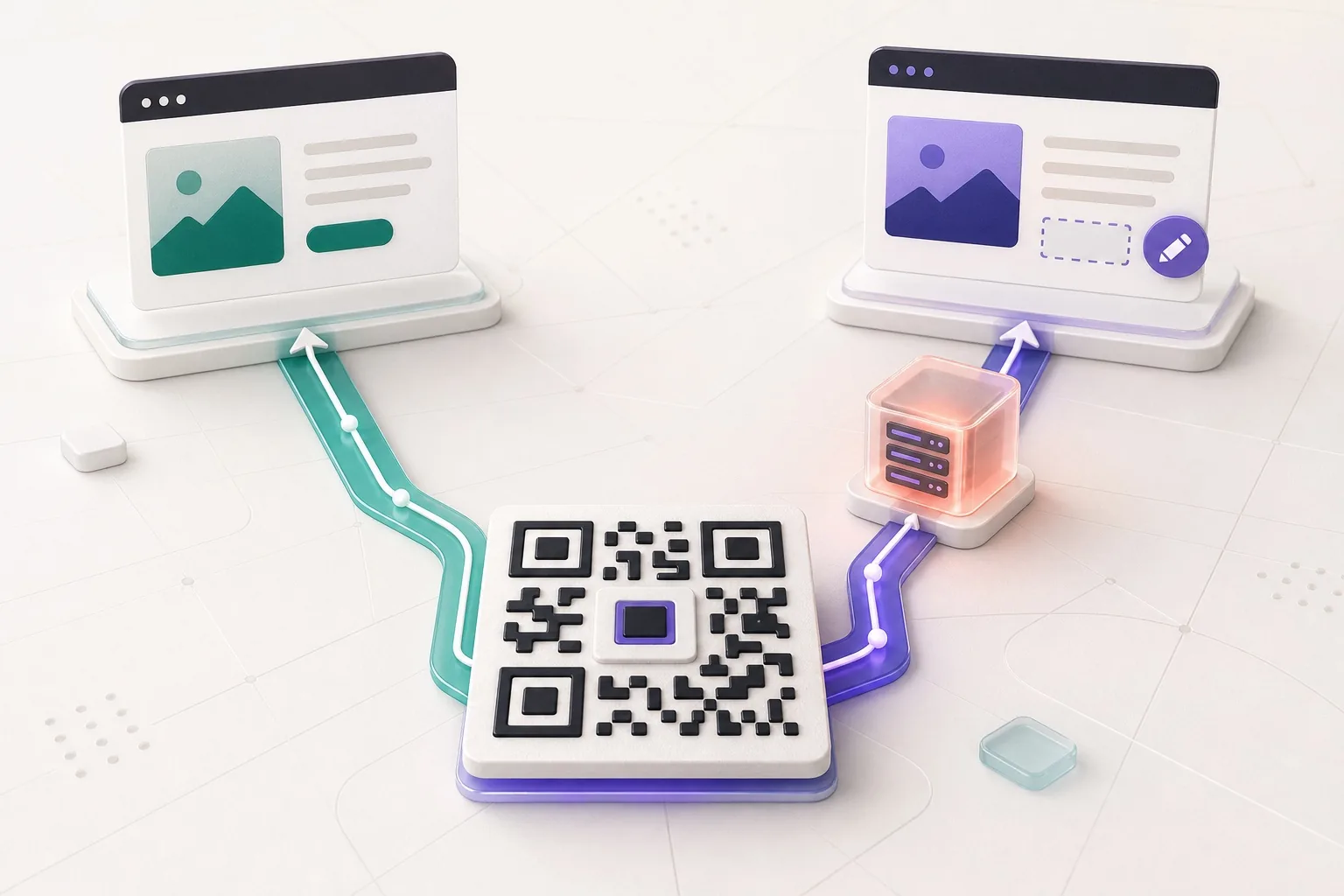
What the redirect actually buys you, measured on real encoded codes, and which payloads are worse off for it.
16 min read - Printing
QR Code Sticker Size: The Circle Costs You 30%
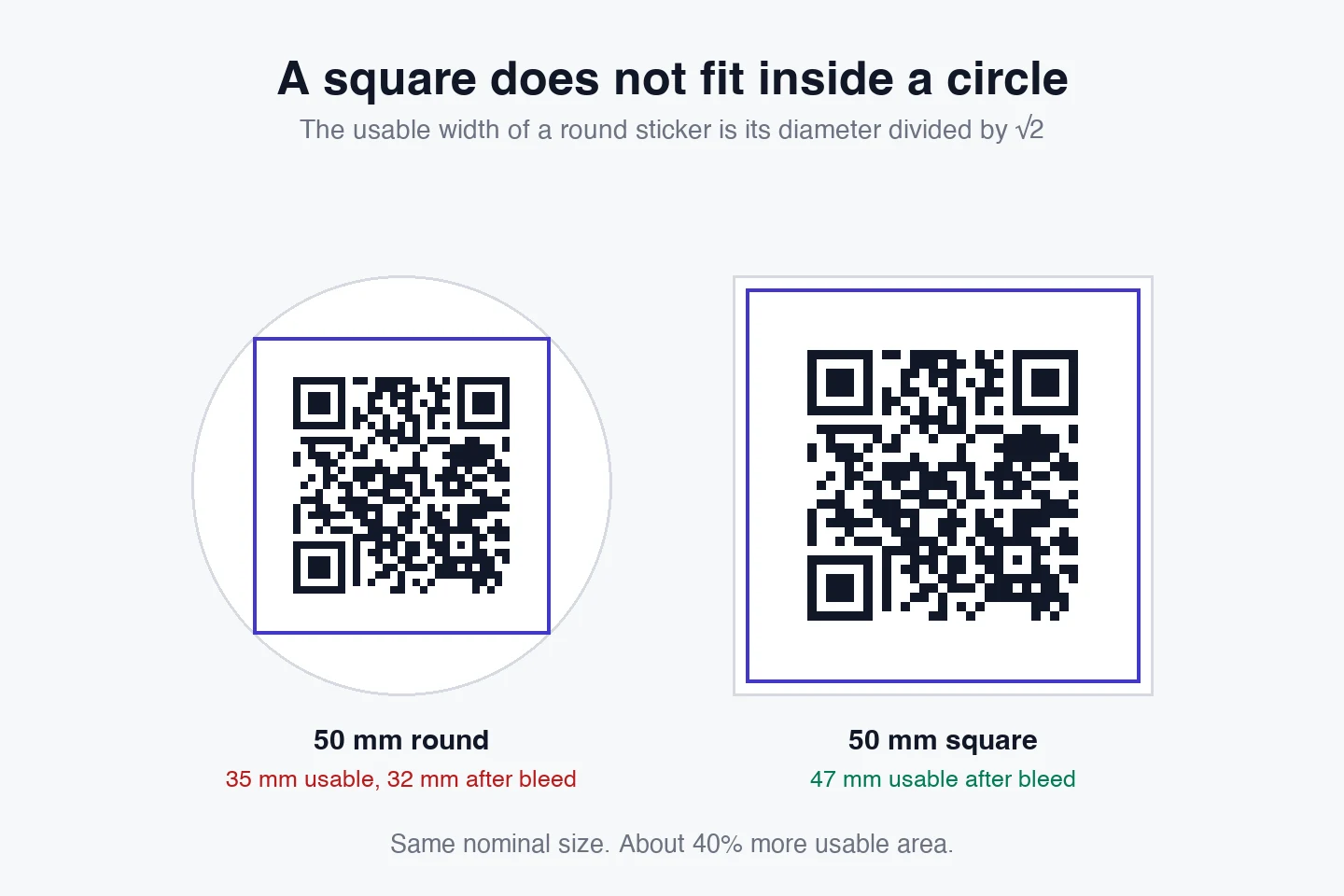
The usable square inside a round sticker is 70% of its diameter. Measured minimum sizes for real links, against every common sticker size.
8 min read - Reference
Offline QR Code Generators for Every Device
What each platform already ships, the measured cost of each payload type, and how to check an offline claim yourself.
26 min read