Create a QR Code for Your Dental Practice
Most local businesses have to interrupt somebody to get attention. You do not. A patient in your waiting room is sitting down, holding a phone, with ten minutes to spend. A code on the table beside them is the easiest thing in the room to scan.
The tool encodes the link in the browser and uploads nothing, which matters when the address points at a patient portal or an intake form. Download a PNG, SVG or PDF, add your logo and practice colours, and the contrast is measured before the file reaches the printer.
The Waiting Room Is Where the Code Earns Its Keep
A cafe puts a review code on the counter and competes with the queue behind it. Your patient has already checked in, already sat down, and has nothing to read but a magazine from two years ago. That is five to fifteen minutes of a phone already in hand, and most practices put nothing in front of it. The chair-side table card is the surface, not the front window.
The second thing worth knowing is about colour. Dental brands run on mint, lavender and pale blue, and those are exactly the colours that look right on a monitor and die on paper under surgery lighting. A pale teal code on a white card has almost no contrast for a phone camera to work with. The tool measures the ratio and refuses to download a code it cannot read back, so the failure happens on screen rather than on a hundred printed recall cards.
Once the table card exists, it usually gains company. The waiting room Wi-Fi is the other thing patients want, and a Wi-Fi code joins them to the network without anybody reading a passphrase aloud. For the review link itself, the Google review QR code generator explains which of the two links Google gives you opens the star form directly.
How to Create a QR Code for Your Practice
Choose what the code should do
A review link, a booking page, a new patient form or the practice website. The code carries whatever a patient should land on when they scan.
Create the code
Paste the address into the tool above. It encodes in the browser and uploads nothing, which matters when the link points at a patient portal.
Add your practice colours
A logo and a brand colour, within the contrast the tool will allow. Pastel dental palettes are exactly the ones that read on screen and fail on paper.
Print and test
Download a PNG, SVG or PDF, then scan the printed code on a phone that is not signed in to the practice. The waiting room is where it earns its keep.
Where Each Code Belongs
- The waiting room
- Chair-side table card, the leaflet rack, the wall by reception. Your patient is sitting still with a phone in hand and nothing to do. It is the single best place for any code you print, and the one most practices skip.
- The reception desk
- Counter sign, the appointment card, the check-out clipboard. Where the patient has just finished and is deciding what to tell people. A review code here catches them while the visit is still fresh.
- The treatment room
- The aftercare card, the mirror, the arm of the chair. Aftercare instructions and the next booking, where the patient is still thinking about their teeth rather than their errands.
- The recall card
- The postcard-sized reminder that goes in the post. The most dental surface there is. A booking or review link on a card that sits on the fridge for six months.
- The business card
- The receptionist's card, the hygienist's card, the welcome packet. A short vCard or website link, sized small. Fits beside the name without crowding the phone number.
Why Use QR Codes in a Dental Practice
- The waiting room is free marketing time
- The patient has already decided to sit down. A code on the chair-side table turns five idle minutes into a review, a booking, or a form filled in before the appointment starts.
- Reviews, which is how patients choose you
- People pick a dentist the way they pick a restaurant. They read the reviews. A code that drops them straight on the star form removes the search step where most of them give up.
- New patient paperwork before they arrive
- A code in the welcome email or confirmation text opens the intake form on the phone. The patient fills it in at home, and the front desk stops handing out clipboards.
- One card that does several jobs
- The recall card can carry a booking link, a review link and the practice number as three codes, or one code that points at a page holding all three.
- Looks like the practice, not a printout
- Your logo and brand colours, within the limits the tool enforces. A pastel teal that reads on screen but dies on paper is the exact failure this tool refuses to download.
Dental Practice QR Code Best Practices
- Test the pastel palette before you print a hundred
- Dental brands reach for mint, lavender and pale blue. Those are the colours that pass on a monitor and fail under surgery lighting. The tool measures the ratio and will not hand you a code it cannot read back.
- Print two sizes, not one
- A code on a recall card is read at arm's length. A code on the waiting room wall is read across the room. The same file cannot serve both, so size them separately.
- Use the review link, not the Maps link
- The link Google gives you for reviews ends in /review and opens the star form directly. The Maps share link opens your listing, where the review button is three scrolls down.
- Keep the quiet zone clear of the logo
- The blank margin around the code is what the phone uses to find it. Let a border or a tooth graphic crowd it and the code stops working before anyone scans it.
- Put the address in text underneath
- Not every patient scans. The ones who type the address later, or photograph the card rather than scan it, read the plain text.
- Ask for the review while the chair is warm
- The end of the appointment, before the patient reaches the car park. A code on the aftercare card catches them while they still remember the visit.
What This Does Not Do
- No scan counts. A static code holds the address and nothing phones home. Counting needs a dynamic code pointing at a redirect you control.
- It cannot make a patient book an appointment or leave a review. It removes the typing, not the decision.
- If the tool refuses your pastel palette, that is the contrast gate doing its job, not a bug. Darken the code colour, or read the print size guide before you commit to a run.
- A static code goes stale if the practice moves or the booking page changes address. Point it at a short address on your own domain, or use a permanent code, and you can repoint it without reprinting.
- Nothing here is dental-only. The same sizing maths runs the estate agent board code and the museum label code, both read from further away than a recall card.
Dentist QR Code Questions
Can I make a QR code for my dental practice?
Yes. Paste your review link, booking page or new patient form into the tool above and it encodes a code in the browser. Nothing is uploaded, which matters when the address is a patient portal.
How do I get patients to leave Google reviews for my practice?
Give them the link that opens the star form, not the listing. You get that link from your Business Profile, and a QR code on the aftercare card or the reception counter puts it one scan away.
Where should I put a QR code in a dental waiting room?
The chair-side table, the leaflet rack and the wall by reception. The patient is sitting still with a phone in hand, which is the whole point. Size the wall code for across the room, not for a desk.
Can I use my practice colours on the QR code?
Yes, but the tool will stop you from using the ones that will not read. Pastel mint and pale lavender, the colours dental brands reach for, are exactly the ones that pass on screen and fail under surgery lighting. The tool measures the contrast and refuses to download a code it cannot read back.
How big should a QR code be on a recall card?
About 18 to 20mm for a short review or booking link, read at arm's length. The full address-bar URL needs a much larger code, so use the short link on anything that fits in a pocket or on a fridge.
Can I put a QR code on a business card?
Yes. Keep it to a short vCard or website link and it fits beside the name at around 18mm without crowding the phone number. The practice logo can sit in the middle if you leave error-correction room for it.
Do QR codes work in a practice with poor mobile signal?
The code itself works anywhere, because it only holds the address. What needs signal is the page it opens. The waiting room Wi-Fi code is the useful one here, and connecting to Wi-Fi needs no mobile data.
Can new patients fill in their forms before they arrive?
Yes, if the form lives on a page you control. A code in the confirmation text or welcome email opens it on the phone, and the patient fills it in at home. It saves the front desk a clipboard and the patient ten minutes in the chair.
Does a QR code let me track who scanned it?
Not a static one. The address is inside the image and nothing phones home when someone scans. If you want scan counts you need a dynamic code, and even then a scan is somebody arriving at the page, not somebody booking.
Will the code stop working if my practice website changes?
A static code carries the exact address you typed. Change that address and the printed code still points at the old one. Point the code at a short address on your own domain and you can repoint it later without reprinting.
Can I put a QR code on the aftercare card?
Yes, and it is one of the better places. The patient reads the aftercare instructions while the visit is fresh, and a booking or review code sits right beside them.
Should the QR code go on the check-out counter or in the chair?
Both, for different jobs. The chair-side card carries aftercare and the next booking. The counter sign carries the review link, because the visit is over and the patient has a free hand.
Can I add my practice logo to the QR code?
Yes, and it costs print size rather than reliability when it is done right. The logo covers modules, so the tool encodes at High error correction to rebuild them, and caps the covered area against that budget.
What should the QR code on the window say?
Say what the scan does. Book an appointment or Leave us a review reads better than a bare code, and tells a passer-by they are about to do something, not open a mystery link.
Do I need a different QR code for every page?
One per job. A review link, a booking page and a new patient form are three different destinations, so three codes. If you want one code that changes where it points, that is a dynamic code, not a static one.
More for work and admin
Contact cards, Wi-Fi, and forms people fill in.
- Google review QR codeThe review link forms measured side by side, including the one that opens the star form rather than the listing.
- Google Form QR codeTurn a Google Form link into a code that scans, and see which of your two links prints smaller.
- Wi-Fi QR codeShare a network without reading the passphrase aloud, with the separator characters escaped properly.
Guides worth reading
All guides- Comparisons
Static vs Dynamic QR Codes
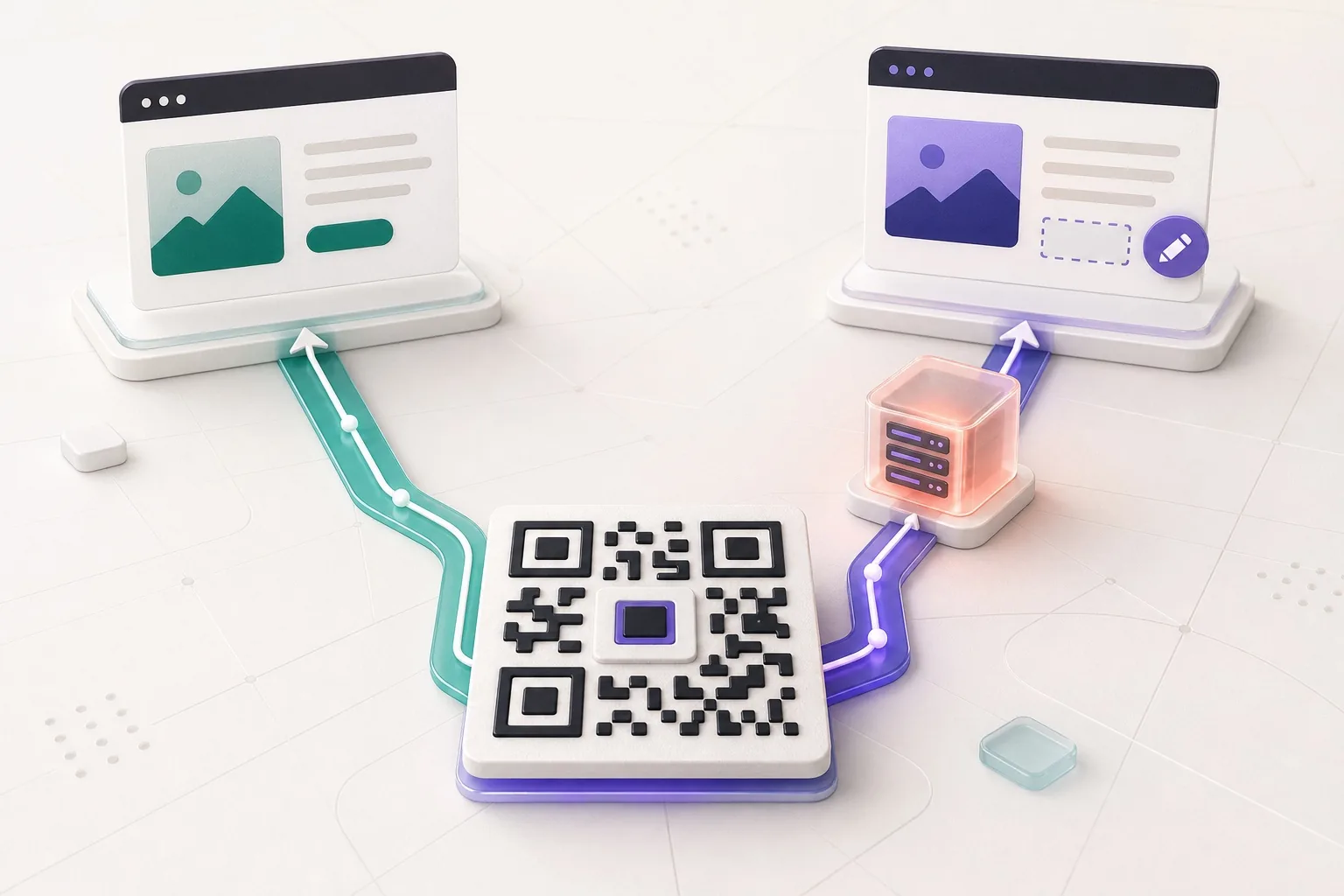
What the redirect actually buys you, measured on real encoded codes, and which payloads are worse off for it.
16 min read - Printing
QR Code Sticker Size: The Circle Costs You 30%
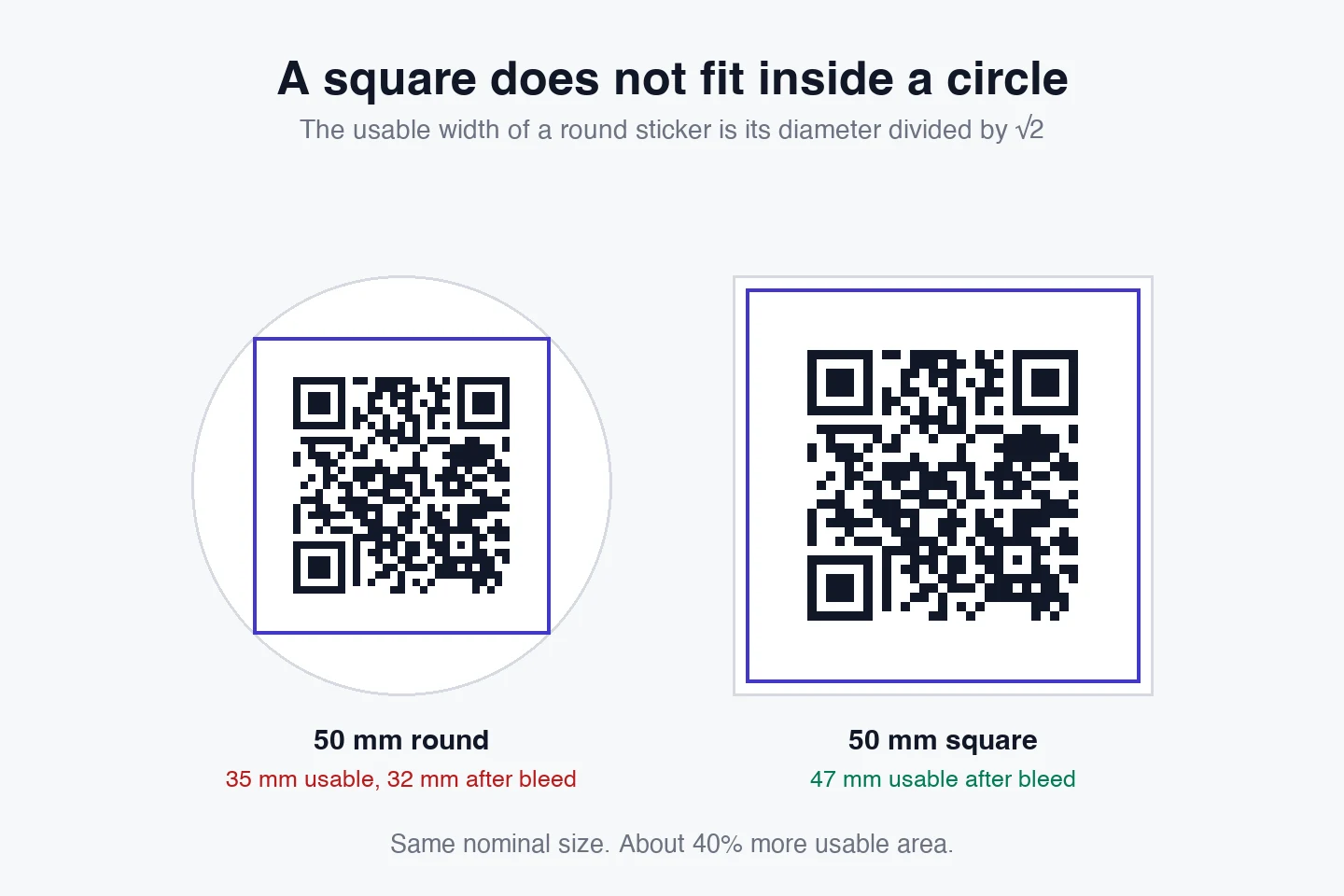
The usable square inside a round sticker is 70% of its diameter. Measured minimum sizes for real links, against every common sticker size.
8 min read - Reference
Offline QR Code Generators for Every Device
What each platform already ships, the measured cost of each payload type, and how to check an offline claim yourself.
26 min read